Essays · Black
The Birth of a ‘Black’
一块“黑”的诞生
The black patches here come from copying out the Small Cursive Thousand Character Classic of Huai Su, the Tang dynasty calligrapher. I write in pale ink, layer over layer, again and again, until the black reaches the depth the composition asks for.
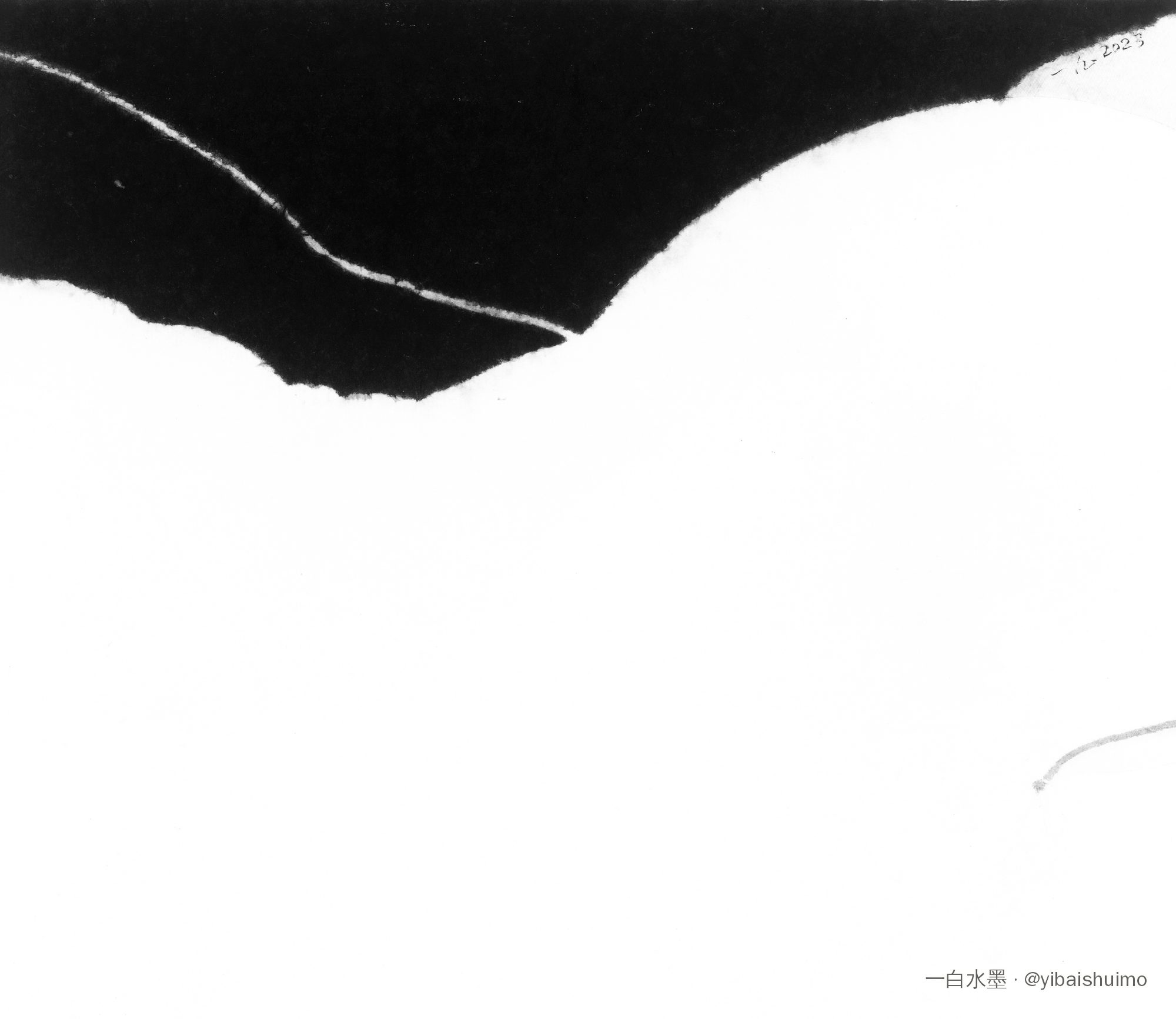
It began by accident. I have a habit: once a week I copy Huai Su's Thousand Character Classic straight through. During the COVID period I ran out of maobian paper one day, the ordinary paper kept for calligraphy practice. Supplies were hard to come by then, and the shortage left me anxious for several days. In the end I simply practised on xuan paper, which is far more precious. To spare it, I used pale ink and wrote over and over, front and back, up and down, left and right, even upside down, until a sheet of white xuan paper had become a sheet of black.
Later, again by chance, a work I was making called for a patch of black in the composition. So as an experiment I copied the Thousand Character Classic in pale ink, over and over, until the strokes accumulated into a patch of «black». Into a single patch of no great size I had copied the whole text through.
How curious: this killed two birds with one stone. It took care of my daily calligraphy practice, and it solved the problem of the «black» patches my paintings needed. What is most marvellous is that this «black» has a genuine texture: brushed lightly with the hand, it feels raised and grainy. And although a multitude of characters have been written there, not a trace of the writing can be seen. That lifts the whole thing onto a philosophical plane: art attaining the height of uselessness. Fascinating!
Once I had discovered the magic of this black, I used it lavishly at first, even adding black patches to paintings already finished, gilding the lily and spoiling them. Little by little my reason came back to me: not every work needs such a «black».